Future Proofing Homes for Senior Independence
As people age, the home should change to match shifting needs while still feeling familiar and safe. Preparing a residence so an older adult can live independently longer is about practical choices in layout, materials, and technology. Thoughtful changes reduce daily friction, lower fall risk, and keep routines intact for as long as possible.
This article walks through design and equipment options that help people maintain independence at home. Each section offers specific examples and tips that homeowners, family members, and professionals can use to plan upgrades that are effective and cost sensible. The focus is on solutions that work today and adapt with small adjustments as needs change.
Designing single level living that supports independence
Single level living removes one of the most common barriers to independence which is navigating stairs. If a whole home remodel is not possible there are smaller alternatives that achieve many of the same benefits.
- Rearrange daily spaces Move primary living functions to one floor so sleeping, bathing, cooking, and relaxation are nearby. A main floor bedroom and bathroom cut walking distance and reduce fall risk.
- Open plan with clear paths Create wide walkways that accommodate mobility devices and reduce trip hazards. Aim for at least 36 inches for main paths and 42 inches in areas used for turning.
- Level thresholds Replace raised thresholds with flush entries or low profile ramps. This limits stumbling and makes transitions easier for wheeled devices and walkers.
- Floor choices Use low slip, low glare materials that cushion minor falls. Cork, vinyl, and low pile carpet with secure edges work well.
Lighting and visual design to reduce falls and confusion
Vision changes with age and lighting plays a major role in safe navigation. A layered approach reduces shadows and improves contrast so steps and edges are easier to see.
General lighting tips
- Increase ambient illumination with fixtures that are easy to reach and operate. Consider rocker switches and larger toggle controls for easier use.
- Use even, non flickering light to prevent headaches and eye strain. LED fixtures with high color rendering help with color contrast.
- Install motion activated lights in hallways and bathrooms to prevent walking in the dark.
Contrast and wayfinding
Introduce subtle contrast to highlight steps, handrails, counters, and appliance edges. A change in texture or color helps the eye locate important features while keeping the overall palette calm and familiar.
Technology options that support independent living
Technology can offer practical solutions for safety, medication management, fall detection, and connection with caregivers. It is important to pick systems with simple interfaces and reliable support.
For those researching options there are consolidated resources that compare home systems and installation approaches and give real world case studies on results in homes and care settings aging in place technology
Monitoring and alerts
- Passive sensors detect movement patterns and can flag unusual inactivity without cameras that feel intrusive.
- Wearable fall detection sends alerts if a sudden impact occurs and the wearer cannot respond. Choose models with long battery life and manual alert buttons.
- Medication reminder systems range from simple timed alarms to locked dispensers that release doses at scheduled times.
Communication and connectivity
Reliable internet access and easy to use communication tools keep social contact strong. Devices with large displays and one touch video calling make remote visits simple. Consider a home hub with voice activation for hands free calling if it matches the user comfort level.
Bathrooms and kitchens that promote safe daily routines
These rooms are high risk for slips and falls. Thoughtful changes create safer task zones while preserving dignity and independence.
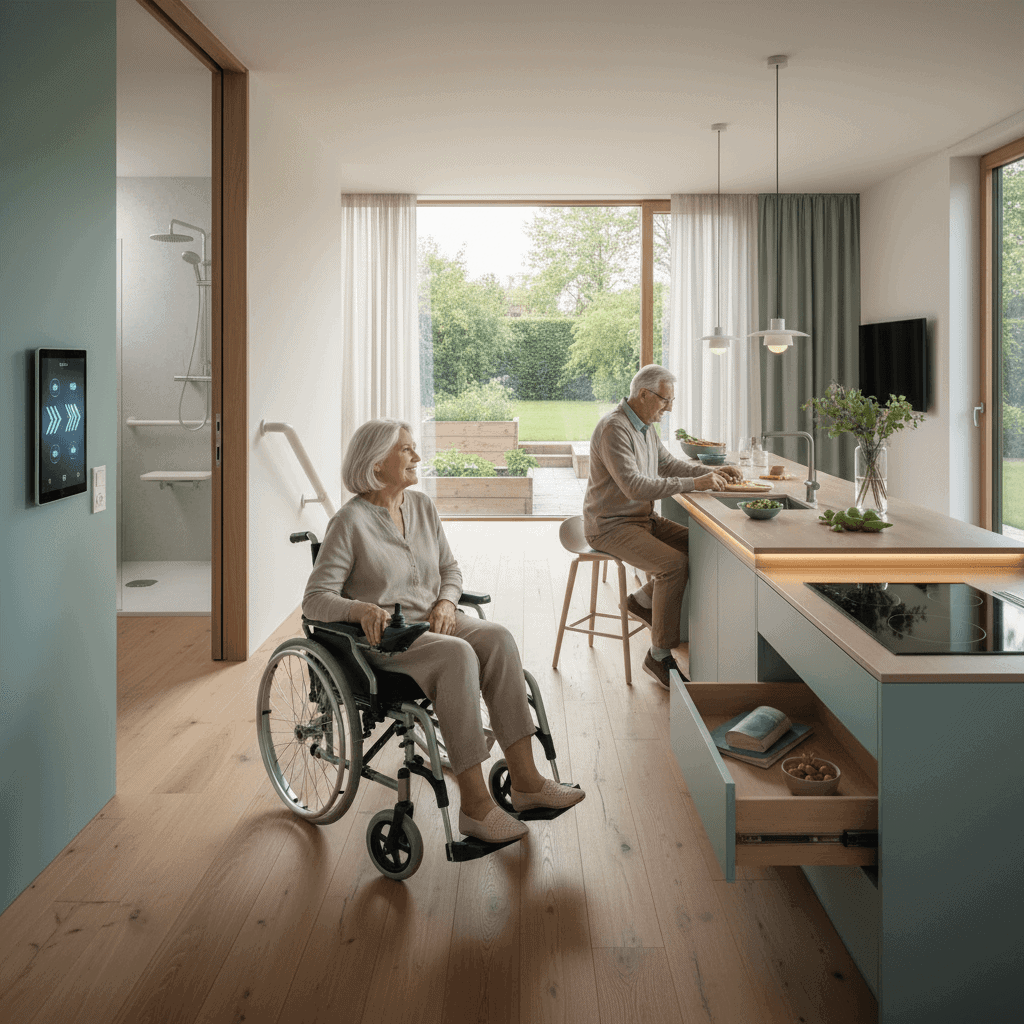
- Walk in showers Install curbless shower stalls with slip resistant flooring. Include a built in seat and handheld shower head for seated washing.
- Grab supports Place sturdy grab surfaces near the toilet, shower, and tub entry. Use mounting methods that transfer load to studs or reinforced blocking.
- Comfort height fixtures Raise toilet seats slightly to make sitting and standing easier. Consider lever handles on faucets for easier grip and operation.
- Pull out shelving In kitchens and bathrooms, pull out shelves at waist level reduce bending and reaching.
Entryways and outdoor access that keep movement safe
Easy and safe access to outdoors encourages activity which supports physical and mental health. Small grading and ramp adjustments can remove barriers and make arrivals and departures less hazardous.
- Non slip surfaces Use textured concrete, pavers, or treated decking that remain slip resistant when wet.
- Handrails and lighting Install continuous handrails on steps and along walkways with dedicated pathway lighting to highlight changes in grade.
- Covered entries A covered porch limits weather related hazards and creates a clear transition space for removing wet shoes and outerwear.
Storage and layout choices that reduce strain and confusion
Organization supports routine and reduces time spent searching for items. Thoughtful placement of daily use items cuts unnecessary motion and fatigue.
- Store everyday items at waist to chest height where lifting is easiest.
- Label drawers and shelves with large print and contrasting colors for quick identification.
- Use pull out baskets and low profile drawers rather than deep cabinets that force reaching.
Financial and planning considerations for gradual changes
Many changes can be made incrementally to match budget and shifting needs. Prioritize low cost high impact measures first and plan for larger adjustments over time.
- Prioritization checklist Start with fall risk reduction such as lighting, handrails, and removing trip hazards. The next phase can address bathing and entryway modifications.
- Cost saving approaches Reuse existing fixtures where possible and focus upgrades on the busiest spaces. Modular solutions allow staged investment so projects do not require one large expense.
- Funding options Investigate home equity programs, local grants, and lender products aimed at home modifications. Some insurers provide rebates for specific safety upgrades.
Working with professionals and family for durable plans
Collaborating with contractors, occupational therapists, and trusted family members yields balanced plans that consider safety, aesthetics, and lifestyle. An occupational therapist can suggest specific changes based on mobility testing and daily routines.
- Ask contractors for examples of similar projects and request photos of finished work.
- Get multiple bids for larger projects and check for insurance and licensing.
- Plan for minimal disruption during work and schedule tasks in phases when possible to keep the household functioning.
Here are practical scenarios that illustrate common approaches
- Scenario one A couple wants to avoid moving but stairs are becoming difficult. They convert a main level guest room into a primary suite, expand the bathroom to include a curbless shower, and add motion lights. Small ramps at exterior thresholds allow smooth access to the garden.
- Scenario two A single homeowner has occasional dizzy spells. They install passive motion sensors to notify a family member of prolonged inactivity and add bedside lighting that comes on with movement. Pull out kitchen shelves and lever door hardware reduce bending and wrist strain.
- Scenario three A person who lives alone values social contact. A large screen device with simplified calling contacts and scheduled check in reminders keeps friends and family connected. They also use a wearable button for emergency alerts when away from the home.
Small changes often have outsized benefits. A single handrail or a brighter pathway can reduce fall risk and increase confidence to move about independently. When planning, think about routines rather than only individual problems. Which mornings involve the most movement What tasks require the most bending or reaching
Practicality is key. Choose durable finishes that are easy to maintain and pick technology with clear user interfaces and reliable vendor support. In the long term this reduces frustration and lowers the need for replacement or constant troubleshooting.
When family members are involved it helps to set clear roles for maintenance and regular checks. A monthly walk through covering lighting, chargers, batteries in devices, and loose hardware keeps systems working and avoids surprises. Keep documentation of device settings, passwords, and warranty information in a simple folder so that updates are straightforward.
Safety and independence are linked to mobility and social engagement. Encourage daily movement with short outdoor trips or household tasks and make regular social connection a built in habit. Combining physical changes with routines creates an environment that supports ongoing independence while keeping the atmosphere familiar and comfortable.
In summary the goal is to make the home match the person using it in ways that limit risk and expand access to daily life. Start with simple, low cost fixes and add targeted modifications and technology as needs shift. Work with professionals when structural changes are required and involve family for ongoing checks. Small, well chosen interventions deliver measurable returns in safety and daily freedom.
Ready to make a plan for your home Start by listing three daily tasks that feel difficult and three places where falls are most likely. Use that list to guide short term purchases and to prioritize contractor work. If you want assistance comparing technology and design options use trusted resources and consult an occupational therapist for personalized recommendations. Taking action now can keep daily life familiar and active for years to come.